
The apex bank hiked its repo, reverse repo (overnight lending and borrowing rates) to 5.25 per cent and 3.75 per cent, respectively, while the cash reserve ratio, or the portion of deposits banks park with RBI, to 6 per cent in line with analysts' expectations.

This is the fifth straight cut in rates by the Reserve Bank of India in as much policy reviews in 2019, and takes the total quantum of reductions to 1.35 per cent.

It can be noted that the rupee lost nearly 7 per cent since the beginning of May as FIIs have pulled out nearly $4 billion from the domestic debt, as bond yields fell on expectation of RBI cutting rates on Monday.
Most members of the Reserve Bank of India's monetary policy committee (MPC) decided to stick to the course on bringing retail inflation to the target of 4 per cent while voting for maintaining status quo in the April review, except external member Jayanth Varma who voted for a 25 bps cut in the repo rate. "I believe that the extant monetary policy setting is well positioned," RBI governor Shaktikanta Das said in the minutes of the policy review, which came out on Friday. "Monetary policy transmission is continuing and inflation expectations of households are also getting further anchored.

Monetary policy easing, coupled with the relaxation of lending rules and greater election-driven fiscal spending in the first quarter of 2019, will provide some support to growth during the first half of 2019-20 fiscal

The MPC headed by RBI Governor Urjit Patel said that the recent excise duty cut by the government on petrol and diesel will help contain inflation.

'The kind of reach it has with so many bank branches even in the remotest part of the country, it is one channel which will play a very important role in vision of insurance for all.'

The central bank has clearly signalled the conditions under which monetary easing would take place early this quarter. And, current conditions meets the RBI's paramters

Reserve Bank of India (RBI) Deputy Governor Swaminathan J criticised some non-banking financial companies (NBFCs) for lax loan appraisal practices and charging excessive interest rates, even as he acknowledged the sector's rapid expansion over the past decade, especially in recent years. "Unfortunately, some NBFCs seem to believe they can operate with weak underwriting in the pursuit of fast growth while levying excessive and unsustainable interest rates - sometimes disguised as upfront or processing fees - followed by aggressive recovery methods in case of default," Swaminathan said at the conference of NBFCs in Chennai last month.

Let's wait for the monetary policy on February 8 -- to see how it complements the fiscal commitments, points out Tamal Bandyopadhyay.

All-out efforts are needed to mitigate the adverse impact of the Covid-19 pandemic, and the RBI will use any instrument necessary to revive growth and preserve financial stability, according to the minutes of the central bank's policy meeting.
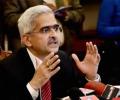
Amid prolonged uncertainty, continued policy support will be crucial for sustained economic recovery from the coronavirus pandemic, Reserve Bank Governor Shaktikanta Das said at the recent meeting of the Monetary Policy Committee. "In this period of prolonged uncertainty, it would be wise to remain agile and respond in a gradual, calibrated and well telegraphed manner to the emerging challenges," opined Das, according to the minutes of the MPC meeting released by the Reserve Bank on Thursday. Observing that economic recovery from the pandemic remains incomplete and uneven, he said, "continued support from various policies remains crucial for a sustained recovery." The governor said the renewed surge in international crude oil prices, however, requires close monitoring.

The rate cut would mean actual gains for vehicle buyers only when banks pass on benefits.

A rate cut could stimulate demand and help revive industrial activity, without much risk of sparking off inflation again.

State Bank of India's chairman O P Bhatt on Monday said that interest rates are likely to go up in the coming months if the Reserve Bank of India (RBI) tightens its monetary stance.

The inflation target has been hiked to to 6.5 per cent from 5 per cent. The FY10 GDP target is unchanged at 6 per cent.
Finance Minister P Chidambaram on Tuesday said current economic situation in the country does not require any sharp adjustment in interest rates, justifying the RBI's decision to leave a key short-term interest rate steady at five per cent in its qua

"Rates are high and obviously it is hurting the industry. We are all hoping for that (lending rates to fall). In the long term, one of the things that will make industry viable and investment come back is to have lower lending rates," Diwakar Gupta, managing director and chief financial officer of SBI, said on Wednesday.

Benchmark equity indices Sensex and Nifty pared early gains to settle lower on Wednesday due to late selling in index major Reliance Industries, ITC and HDFC Bank even as the RBI took the first step towards a rate cut in its monetary policy review. Erasing its early gains, the 30-share BSE Sensex fell 167.71 points or 0.21 per cent to close at 81,467.1. During the day, it surged 684.4 points or 0.83 per cent to hit an intra-day high of 82,319.21.

'It is going to be a tough balance for the RBI to manage economic stability and ensure smooth government borrowing.'

The repo or short term lending rate remains unchanged at 6.75 per cent and the reverse repo rate at 7.75 per cent.

RBI might not cut rate on June 2 but will surely cut soon.

To a question related to RBI's policy rate, Rajan said no amount of interest rate cut is going to help if credit growth is weak.

The RBI's decision to hike the benchmark interest rate will make home loans costlier and affect housing sales, especially in affordable and mid-income segments, according to property consultants. The RBI on Wednesday hiked the key benchmark rate by 50 basis points. Property consultancy firms Anarock, Knight Frank India, JLL India, Colliers India, India Sotheby's International Realty and Investors Clinic said that the RBI's move was on the expected line to control inflation and this would result in an increase in interest rates on home loans.

RBI has announced a 50 bpc rate cut, India Inc cheers the move.

On the reduction in the SLR ratio, he said it was a signal from the point of view of long-term reforms.


A day after the Reserve Bank of India's (RBI's) Monetary Policy Committee hiked the policy repo rate by 50 basis points (bps), several commercial banks, including ICICI Bank and Bank of Baroda, raised their external benchmark-linked loan rates by an equal amount on Thursday. HDFC, the country's largest mortgage lender, too, increased its interest rates on housing loans by another 50 bps. In total, it has raised rates by 85 bps since May 4, when the RBI had increased the repo rate by 40 bps in an off-cycle meeting.
.jpg)
Food and fuel inflation in India have remained high for several years, the paper said, adding to durably reduce the current high inflation, the monetary policy stance needs to remain tight for a considerable length of time.

'I think today RBI supervision is much sharper than what it was earlier.'
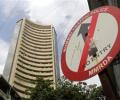
D-Street is hoping RBI policy review meeting on Tuesday will uphold its stand on easing of interest rates

With rising credit demand, cleaner balance sheets, and renewed investor confidence, banks are positioned at the forefront of the market rally. From major players like ICICI and HDFC to broader policy shifts, there's much driving this momentum.
With rising credit demand, cleaner balance sheets, and renewed investor confidence, banks are positioned at the forefront of the market rally. From major players like ICICI and HDFC to broader policy shifts, there's much driving this momentum.
With rising credit demand, cleaner balance sheets, and renewed investor confidence, banks are positioned at the forefront of the market rally. From major players like ICICI and HDFC to broader policy shifts, there's much driving this momentum.
Will RBI chief have the final say, in the form of a veto

Weighed down by a weak rupee, the Reserve Bank on Tuesday chose to keep all key interest rates unchanged and asked the government to take urgent steps to reign in the high current account deficit.

As it stands, there does not seem to be a threat to prices.

The NSE Nifty slumped to a low of 4,833, and finally settled with a heavy loss of 155 points at 4,853. The index has shed 422 points (8%) in the last six day. The market breadth too was extremely bearish, with nearly eight stocks for each advancing stock. Out of 2,944 stocks traded, 2,582 declined and 337 advanced on Wednesday.

The case for a swift and sizable reduction in the repo rate rests on several pillars. First, and most importantly, there is mounting evidence that the five-year old surge in India's economic growth, especially industrial growth, peaked a few months back.

Unless RBI temporarily relaxes the norms on recognising of bad loans, the pressure on this front could rise in the December quarter.
